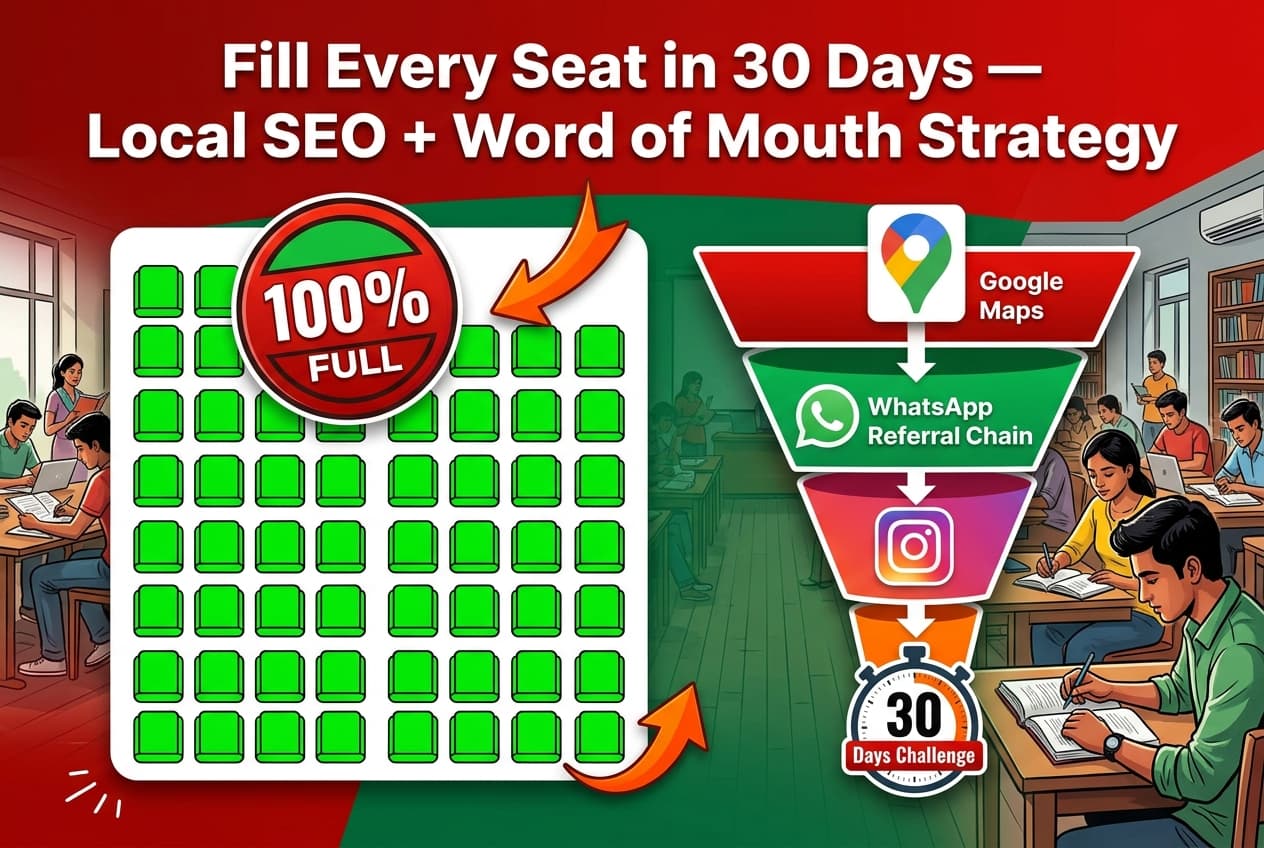

An empty seat earns nothing, and most new study libraries open with 0% occupancy and no existing reputation in their locality. The fastest, lowest-cost path to filling seats isn't paid advertising — it's ranking on Google Maps for "library near me" and "best study room near me," where students actively searching are already looking for exactly what you offer.
This guide is a local SEO and student-marketing playbook specifically for library owners: setting up Google Business Profile correctly, generating reviews, and combining that with low-cost offline tactics to move from empty to full within 30 days.
In This Marketing Guide
1. Setting Up Google Business Profile the Right Way
A correctly configured Google Business Profile (GBP) is the single highest-leverage local SEO action a new library can take — it's free, and it's what determines whether you show up in the Maps pack for "library near me" searches:
| GBP Element | What to Do |
|---|---|
| Business Category | Select "Library" as primary; add "Study center" or "Tutoring service" as secondary if available. |
| NAP Consistency | Name, address, and phone must exactly match your website and any other online listing. |
| Photos | Upload 15-20 real photos — seating, AC units, entrance, washrooms — profiles with more photos get significantly more clicks. |
| Hours & Attributes | List actual shift hours (e.g., 6 AM-10 PM or 24 Hours) and attributes like WiFi, AC, and women-friendly if applicable. |
| Posts | Publish a weekly GBP post (seat offers, new shift launches) — active profiles rank better than dormant ones. |
2. Getting Google Reviews Without Being Pushy
Review count and rating are among the strongest local ranking signals, but asking too aggressively can feel awkward for students. The highest-response approach is timing the ask to a positive moment — right after a student passes an exam, completes their first month, or specifically compliments the facility — and sending a direct Google review link over WhatsApp rather than asking in person on the spot.
A steady trickle of new reviews matters more than a one-time burst. Google's algorithm tends to favor profiles with recent, ongoing review activity over ones with many old reviews and nothing new in months, so spacing the ask across renewal cycles throughout the year — rather than mass-requesting from every student at once — produces a healthier, more consistently ranking profile.
3. Offline Tactics That Still Move the Needle
Local SEO fills the top of the funnel, but a new library in a competitive locality also benefits from offline visibility: a flex banner outside coaching institutes and hostels, pamphlet distribution timed to coaching-batch start dates, and a referral incentive (one free week) for existing students who bring a friend. These tactics work particularly well for reaching students who haven't yet started searching online but are actively looking for a library through word of mouth in their coaching circle.
4. QR Self-Registration for Walk-In Students
Once a marketing effort brings a walk-in student to your door, converting that visit into a paying subscriber should take under a minute. A QR poster at the entrance that lets a student self-register — entering their name, phone number, and preferred shift directly on their own phone — removes the friction of a staff member manually filling a paper form, and captures leads even when staff are busy with other students.
5. Competitive Pricing & Free Trial Days
In a locality with 2-3 established competitor libraries, undercutting on price alone rarely wins long-term, since it signals lower quality and starts a race to the bottom. A more effective approach for new libraries is offering a genuinely free trial day — letting a prospective student experience the seat, AC, and quiet environment before committing — combined with pricing that matches, not undercuts, the local market average once the trial converts.
Facilities matter more than price in most students' actual decision, once price is roughly comparable across options in a locality. Reliable WiFi, clean washrooms, uninterrupted power backup, and a genuinely quiet environment consistently rank above marginal price differences in what students say drove their choice — which is also why photos and reviews highlighting these specific facilities on Google Business Profile tend to convert better than price-focused messaging.
6. Frequently Asked Questions
How do I rank my library on Google Maps for "library near me"?
Set up a complete Google Business Profile with the correct category, consistent name/address/phone, 15-20 real photos, and actively collect Google reviews — these are the strongest local ranking signals for Maps search.
How do I get more Google reviews without seeming pushy?
Ask at a positive moment — after an exam, a first-month milestone, or a specific compliment — and send a direct WhatsApp link to leave a review, rather than asking in person on the spot.
Should a new library undercut competitor pricing?
Not usually. Matching the local market price while offering a free trial day tends to work better long-term than undercutting, which can signal lower quality.
How can walk-in students register quickly?
A QR poster at the entrance lets students self-register their name, number, and preferred shift directly on their own phone, converting a walk-in visit into a subscriber in under a minute.
Related reading: Find the Best Library Near Me: Complete Guide.
Let Walk-Ins Self-Register in Seconds
Print a QR poster at your entrance and convert local search traffic into paying students.
Try Librify Free →