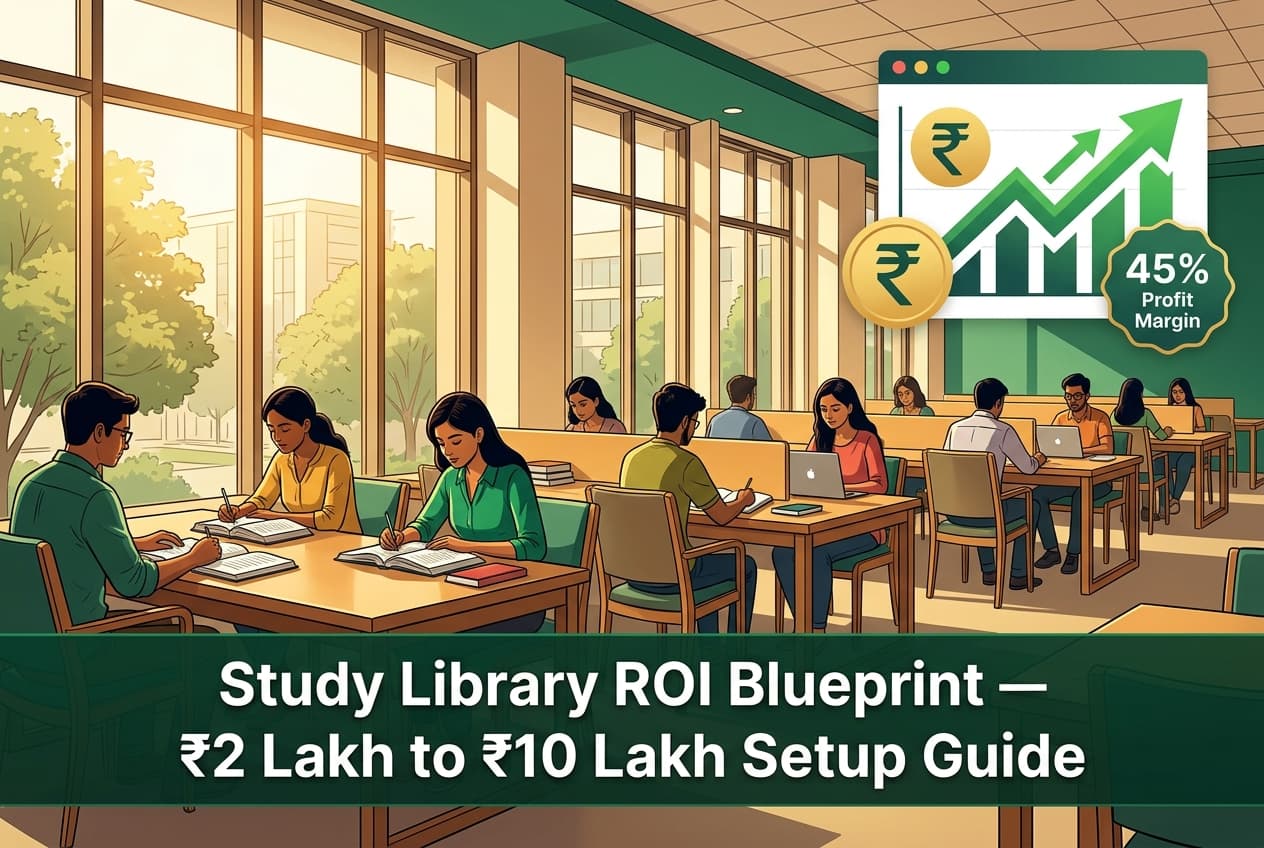

India's private study library and reading room business has grown into a genuine, profitable small-business category — driven by competitive exam aspirants (UPSC, SSC, banking, state PCS) and students who need a quiet, disciplined study environment their home doesn't offer. But "profitable" depends entirely on getting the seat count, shift model, and monthly expense math right before you sign a rental agreement.
This blueprint walks through real capital cost, monthly operating expense, and revenue numbers for a 50-seat to 200-seat study library in India, using a 3-shift occupancy model that lets one physical seat generate 2-3 paying subscriptions a day.
In This ROI Blueprint
1. Capital Cost by Seat Count
Initial capex covers furniture (study cabins/desks, chairs), interior work, lighting, air conditioning or coolers, WiFi, CCTV, and door locks. Here is a realistic capex range for Tier-2/Tier-3 Indian cities:
Metro cities like Delhi, Mumbai, Bengaluru, and Pune generally push these numbers 20-35% higher due to higher-grade AC systems, premium interior finishing expectations, and higher electrician/carpenter labor rates. Tier-2 and Tier-3 cities across Uttar Pradesh, Bihar, Rajasthan, and Madhya Pradesh — where a large share of competitive-exam aspirants are based — typically see capex land closer to the lower end of the ranges below.
| Seat Count | Furniture & Interior | Electrical, AC & WiFi | Total Capital Estimate |
|---|---|---|---|
| 50 Seats | ₹1,50,000 – ₹2,00,000 | ₹80,000 – ₹1,20,000 | ₹2,30,000 – ₹3,20,000 |
| 100 Seats | ₹3,00,000 – ₹4,00,000 | ₹1,50,000 – ₹2,20,000 | ₹4,50,000 – ₹6,20,000 |
| 200 Seats | ₹5,50,000 – ₹7,50,000 | ₹2,80,000 – ₹4,00,000 | ₹8,30,000 – ₹11,50,000 |
Estimates exclude rent deposit and premium/goodwill amount, which vary heavily by city and locality.
2. Monthly Operating Expenses (100-Seat Library Example)
| Expense Head | Monthly Cost |
|---|---|
| Rent | ₹20,000 – ₹50,000 |
| Electricity (AC-heavy) | ₹15,000 – ₹30,000 |
| Staff (1-2 attendants) | ₹15,000 – ₹25,000 |
| Internet & Software | ₹1,000 – ₹1,500 |
| Maintenance & Misc. | ₹3,000 – ₹6,000 |
| Total Monthly Opex | ₹54,000 – ₹1,12,500 |
3. The 3-Shift Revenue Model
The core insight in this business: one physical seat can be sold to 2-3 different students across Morning (6 AM-2 PM), Evening (2 PM-10 PM), and Night/24x7 shifts without any seat clash, since each student only occupies it during their booked window. At a conservative ₹800-₹1,200 per seat per month per shift and 80% occupancy, a 100-seat library running 2 shifts generates roughly ₹1,28,000-₹1,92,000 in monthly gross revenue.
A third, night/24x7 shift adds a further revenue layer without any additional capex — the same desks, chairs, and cabins already paid for now earn a third time in a 24-hour cycle. In cities with a large UPSC, SSC, or banking-exam aspirant population, night shifts often fill up faster than daytime slots, since many aspirants prefer distraction-free study hours after their coaching classes or day jobs end. The tradeoff is a slightly higher electricity and staffing cost for the overnight window, which should be built into the opex model above rather than treated as pure additional profit.
4. Profit Margin & Break-Even
Against ₹54,000-₹1,12,500 in monthly opex, a 100-seat, 2-shift library at 80% occupancy typically nets a 45%-62% profit margin once past the first 2-3 months of ramp-up. Break-even at these numbers is usually reached at 50-60% occupancy — meaning even a partially-filled library covers its costs, and profit accelerates sharply as the remaining seats fill.
The first 60-90 days after opening are the highest-risk window financially, since capex has already been spent but occupancy is still building from zero. Most new libraries in decent locations reach 40-50% occupancy within the first month through local marketing and word of mouth, cross 70% by month three, and stabilize near their city's typical ceiling (usually 75-90%) by month six. Budgeting for 3 months of full opex at low occupancy before revenue catches up is the single most common financial planning mistake new library owners make.
5. Wooden Cabin vs Metal Partition Cost
Wooden study cabins cost roughly ₹3,500-₹5,500 per seat and offer better acoustic privacy and a premium feel, popular for UPSC/exam-focused libraries charging premium fees. Metal/laminate partitions cost roughly ₹1,800-₹2,800 per seat and are faster to install, suited to budget-focused libraries prioritizing seat count over premium ambience.
The right choice depends on your target student segment and city. In markets with heavy UPSC/state-PCS coaching density, students are often willing to pay a premium of ₹100-₹300 more per month for a wooden cabin with better privacy and sound insulation, which can pay back the higher upfront cabin cost within 12-18 months. In price-sensitive markets or smaller towns, metal partitions let you fit more seats into the same floor area and reach break-even faster on a smaller starting budget.
6. How to Increase Monthly Income Without Expanding Space
Most owners' first instinct when revenue plateaus is to look for a bigger space or a second branch. Before committing that capital, four lower-cost levers usually unlock meaningful additional revenue from the seats already in place:
- Add a night/24x7 shift: Many exam aspirants prefer late-night or overnight study slots — this alone can add a third revenue stream per seat.
- Automate fee collection: Reducing manual follow-up on dues directly improves realized revenue versus billed revenue.
- Track occupancy digitally: A real-time seat map shows exactly which shifts have vacant capacity so you can market those slots specifically.
- Reduce electricity waste: Zone-wise AC/lighting control based on actual shift occupancy cuts the largest controllable expense line.
In practice, owners who implement even two of these four levers typically see a 15-25% improvement in net monthly profit within the first quarter — without spending anything on additional furniture, rent, or floor area.
7. Frequently Asked Questions
Is the library business profitable in India?
Yes. A well-run 100-seat study library operating 2-3 shifts at 80% occupancy typically nets a 45%-62% profit margin after covering rent, electricity, staff, and software costs.
How much capital is required to open a 50-seat library?
Roughly ₹2,30,000-₹3,20,000 in furniture, interior, electrical, AC, and WiFi setup — excluding rent deposit, which varies by city and locality.
What is the break-even occupancy for a study library?
Most 100-seat, multi-shift libraries break even at 50-60% occupancy, with profit margins expanding sharply as occupancy climbs toward 80% and beyond.
How can I track my library's revenue and expenses digitally?
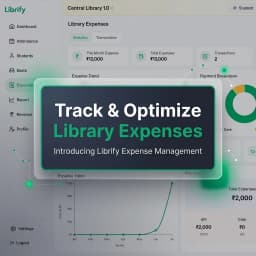
Apps like Librify provide a revenue dashboard that tracks daily collections, expenses, and occupancy per shift automatically, replacing manual registers and spreadsheets.
Related reading: Library Business in India: Cost & Profit Plan and How to Start a Library Business in India.
Track Your Library's Revenue Automatically
See daily collections, expenses, and occupancy by shift in one dashboard.
Try Librify Free →